DIY vs professional floral services what to know before you decide
Posted on 10/10/2026
DIY vs professional floral services: what to know before you decide
Choosing between doing your own flowers and hiring a professional florist sounds simple at first. Then the reality kicks in: stems arrive on the wrong day, roses open too quickly, your vase list gets longer, and suddenly the "easy" option feels a bit less easy. If you're weighing up DIY vs professional floral services what to know before you decide, this guide will help you sort the romantic idea from the practical one.
Whether you're planning a wedding, marking a family occasion, ordering flowers for someone special, or just trying to make an event look polished without overspending, the decision affects your budget, your time, and the final result. Let's look at the real trade-offs, the hidden bits people often miss, and how to choose the option that fits your life rather than someone else's Pinterest board.
To be fair, there isn't one "right" answer. DIY can be brilliant for some events. A professional service can be worth every penny for others. The trick is knowing where your time, confidence, and expectations sit.
- Why this decision matters
- How DIY and professional floral services work
- Key benefits and practical advantages
- Who each option suits best
- Step-by-step guidance
- Expert tips for better results
- Common mistakes to avoid
- Tools, resources and recommendations
- Law, compliance, standards, or best practice
- Options and comparison table
- Case study or real-world example
- Practical checklist
- Conclusion
- Frequently asked questions
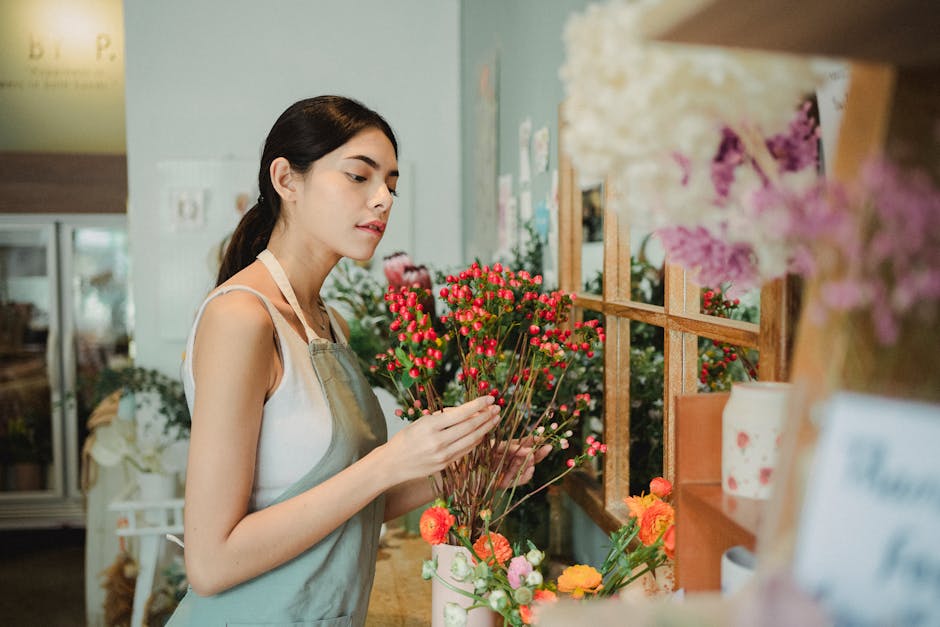
Why DIY vs professional floral services what to know before you decide Matters
Flowers do more than fill space. They set tone. They make a room feel warmer, softer, more intentional. In a kitchen they can make a Tuesday feel decent again; at a wedding or memorial, they help people feel the moment. That is why choosing between DIY and professional floral services matters more than people first expect.
The biggest issue is not simply cost. It's the full picture: design confidence, freshness, transport, storage, timing, and stress. A bouquet that looks lovely on the table at 10am can look tired by 3pm if it's been handled badly. Likewise, a DIY arrangement may save money, but if you spend most of the week sourcing buckets, snips, and flowers, the "saving" can disappear pretty fast.
There's also the emotional side. If you are planning a wedding, funeral, or milestone celebration, flowers carry meaning. When the arrangement needs to feel balanced and reliable, a professional florist brings structure and consistency. When the arrangement is casual, creative, or smaller in scale, DIY can give you more freedom. You'll notice this especially if you're aiming for a specific style, like loose meadow bouquets, neat table posies, or more formal sympathy tributes.
And honestly, timing is often the deal-breaker. Flowers are alive. They don't wait politely while the rest of your to-do list catches up. If your event week is already packed, going DIY can become one more task that seems manageable right up until Thursday evening. Then the buckets appear. The thorns appear. A tiny floral emergency appears. You get the idea.
How DIY vs professional floral services what to know before you decide Works
At a basic level, DIY floral work means you source the flowers yourself, prep them, design the arrangements, and handle setup. Professional floral services do most or all of that for you, usually from consultation through delivery and installation. The details vary by occasion, but the process generally looks like this.
How DIY floral arrangements usually work
With DIY, you're doing the project management as well as the design. That means choosing flowers, selecting colour palettes, ordering enough stems, collecting tools, trimming stems, conditioning blooms, and arranging them close to the event. If you're making centrepieces or bouquets, you may also need to think about mechanics such as floral foam alternatives, wire, tape, ribbon, and water sources.
DIY works best when the design is fairly simple and the number of arrangements is limited. A small birthday table, a baby shower backdrop, or a handful of bud vases is very different from fifty ceremony flowers plus reception arrangements plus buttonholes. Big scale changes everything. Very quickly.
How professional floral services usually work
A professional florist typically starts with a brief: occasion, colour ideas, budget, venue, and style. From there, they recommend flowers that work in season, suit the look, and hold up during the day. They may also advise on practical things like delivery windows, vases, setup, and flowers that travel well. If you're ordering through a local florist such as a florist in Rush Green RM7, you'll usually get guidance that reflects local delivery realities too.
Professional services are often a better fit when you need precision. Think bridal bouquets, sympathy tributes, corporate displays, or same-day arrangements where speed and finish matter. The work is not only about making things pretty; it's about making them last, fit the brief, and arrive in good shape. That part gets overlooked more than it should.
The middle ground people forget about
There's a useful in-between option: partial DIY. Some people buy larger focal arrangements from a florist and do simple table flowers or accent pieces themselves. Others choose florist-designed flowers for the important elements and keep the rest basic. This can be a smart compromise if you want a polished result without handing over the whole project.
Key Benefits and Practical Advantages
Both options have strengths. The "best" choice depends on what you value most on the day.
DIY floral services: main benefits
- More control over style: You decide every stem, ribbon, and vase.
- Potentially lower spend: Especially for simple arrangements or small events.
- Personal touch: Lovely for family events, memorials, and intimate gatherings.
- Flexibility: You can adjust on the fly if your plans change.
- Creative satisfaction: Some people genuinely enjoy the making process. It's calming, almost meditative, until it isn't.
Professional floral services: main benefits
- Consistency: The designs usually look cohesive across all arrangements.
- Time savings: You avoid sourcing, prep, and the late-night stem trimming session.
- Technical skill: Florists know how to build shape, balance, and structure.
- Better handling of delicate flowers: Helpful for weddings, luxury events, and sympathy work.
- Less stress: When there's a lot riding on the flowers, calm matters.
One practical advantage of using a florist is access to seasonal recommendations and delivery options. If you need flowers to arrive quickly, services such as same-day flower delivery in Rush Green RM7 or next-day flower delivery can be a real lifesaver. That kind of convenience is hard to beat when life gets busy.
DIY wins on flexibility and hands-on creativity. Professionals win on reliability and finish. That's the short version, anyway.
Who This Is For and When It Makes Sense
Some readers are already leaning one way. Others are stuck because both options sound reasonable. Here's the honest breakdown.
DIY makes sense if you are...
- planning a small event with a manageable number of arrangements
- comfortable with basic floristry and willing to practise first
- happy to keep the design simple
- working with a tight budget and plenty of spare time
- enjoying the process, not just the result
Professional floral services make sense if you are...
- planning a wedding or formal event
- short on time or already juggling a lot of suppliers
- looking for a polished, consistent look
- ordering flowers for a sympathy setting or another emotionally sensitive occasion
- needing delivery, setup, or help with flower care
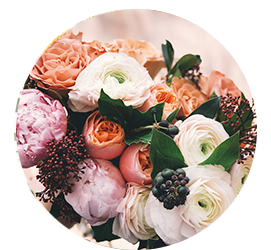
For example, if you're choosing wedding flowers, the pressure is different. A bridal bouquet is not just a bouquet. It shows up in every photo. It needs to last through nerves, travel, and maybe a few happy tears. In those cases, many couples prefer professional support, such as dedicated wedding flowers or even specific items like bridal bouquets and buttonholes.
On the other hand, a birthday lunch at home might be perfectly served by DIY jam-jar arrangements and a few bright stems from the shop. No drama required. That's the point.
Step-by-Step Guidance
If you're undecided, work through the decision in order. Not emotionally. Practically. That usually gives the clearest answer.
Step 1: Define the occasion
Start by asking what the flowers need to do. Are they decorative background pieces? A statement arrangement? A tribute? A gift? The more emotionally or visually important the flowers are, the more value a professional service tends to offer.
Step 2: Count the actual number of arrangements
One bouquet is very different from twenty centrepieces. DIY gets more complex with scale. A lot more. If you're planning tables, ceremony flowers, entrance pieces, and personal flowers, the workload rises quickly and so does the chance of something going wrong.
Step 3: Be honest about your skill level
If you have never conditioned flowers, wired stems, or designed an arrangement under time pressure, don't expect your first attempt to look like a professional display. That isn't a criticism; it's just reality. A few practice runs help, but they also take time and materials.
Step 4: Decide what matters most
Pick your top three priorities. For example:
- lower cost
- less stress
- best possible appearance
If the top priority is appearance and reliability, a professional florist is often the stronger choice. If your top priority is cost and you're happy to accept a simpler finish, DIY may be the better fit.
Step 5: Check the practical details
Ask yourself where the flowers will sit, how they'll get there, how long they need to last, and who is looking after them. A warm reception room, a car boot in summer, or a damp church porch all affect the final result. Flowers can be fussy little things. Beautiful, but fussy.
Step 6: Compare the total effort, not just the invoice
The DIY version may look cheaper until you add delivery trips, extra vases, floral tape, wiring, transport fuel, and the hours you will spend doing all the actual work. Professional services often look pricier on paper because the labour is visible. DIY labour is just... your labour. Easy to underestimate.
Expert Tips for Better Results
If you choose DIY, or even if you're working alongside a florist, these tips can make a noticeable difference.
Choose flowers that behave well
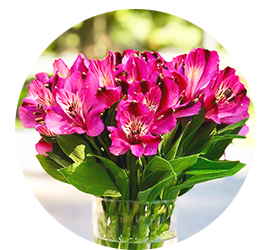
Some flowers are more forgiving than others. Alstroemeria, carnations, chrysanthemums, and germini can be good choices for simple DIY work because they tend to hold up well and are manageable for beginners. If you're after something with more movement, lilies or roses can still work, but they need a bit more care. If you want inspiration, look at alstroemeria, carnations, chrysanthemums, and lilies as practical starting points.
Stick to a simple palette
Two or three colours usually look more elegant than six. Mixed colours can be lovely, but the more shades you add, the easier it is for the arrangement to look unplanned. Simple doesn't mean boring. It often means confident.
Use seasonal thinking
Seasonal flowers are often fresher, easier to source, and more visually cohesive. A summer palette will naturally feel different from an autumn one. If you're selecting products, browsing collections like summer flowers or autumn can help you narrow the style without overcomplicating things.
Think in layers
Good arrangements usually have a focal flower, a supporting bloom, and a bit of texture or filler. That balance is what makes a bouquet feel finished rather than random. It's a small detail, but it matters. A lot.
Keep transport in mind from the start
If flowers need to travel, design with that in mind. Loose, airy pieces can collapse in a car. Delicate heads can bruise. Water sources matter. A professional florist already thinks about this; DIY often learns the hard way.
When ordering professionally, be specific but not overly rigid
Give your florist the mood, the colours, and the occasion. Explain any dislikes and must-haves. But leave room for them to substitute flowers if needed. That flexibility usually leads to a better result, especially if a particular stem is unavailable on the day.
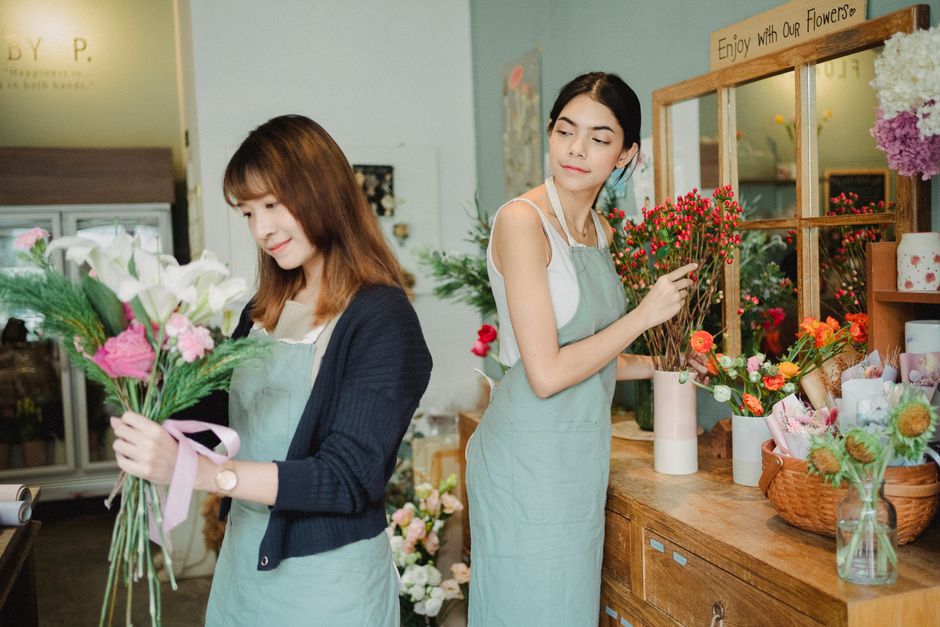
Common Mistakes to Avoid
Most floral disappointments are not about bad taste. They're about planning gaps. Here are the ones we see most often.
- Underestimating the time: DIY flowers take longer than people think, especially when there are multiple arrangements.
- Buying too late: Fresh flowers need proper timing so they arrive at the right stage of bloom.
- Ignoring temperature: A warm room or sunny window can shorten vase life quickly.
- Choosing too many flower types: Mixed varieties can look busy if you don't have a clear plan.
- Forgetting mechanics: Scissors, buckets, tape, wire, and clean water are not optional extras. They're part of the job.
- Not budgeting for contingencies: A small extra spend is often needed for substitutions, spare stems, or last-minute fixes.
- Assuming professional means identical to the brochure: Natural flowers vary. A good florist will keep the style, not force artificial uniformity.
A very common one: people design for the table in theory, then discover the table is smaller, darker, or oddly shaped. It happens. Measure first. Always.
Tools, Resources and Recommendations
Whether you go DIY or professional, the right tools make life easier.
Useful DIY tools
- clean sharp snips or florist scissors
- clean buckets for conditioning stems
- vases or containers with enough weight to stay stable
- floral tape and binding materials
- water spray bottle
- ribbon, twine, or finishing materials
- paper towels and spare cloths for water spills
Helpful professional options
If you'd rather not manage the whole process, consider ordering from a local florist with a clear product range. For everyday gifting, flower delivery in Rush Green RM7 and birthday flowers can take the guesswork out of the choice. If you need something simpler or more budget-conscious, cheap flowers and budget options can still look thoughtful when selected carefully.
Simple recommendations by occasion
- Birthday: A bright, ready-made bouquet is often easier than DIY, especially if time is short.
- Sympathy or funeral: Professional floral services are usually the safer, more respectful route.
- Wedding: Consider hybrid planning or full professional support unless the scale is tiny.
- Everyday gift: Either option can work, depending on budget and timing.
If you want a dependable all-round option, collections like best sellers and florist choice are often a sensible starting point because they lean on what florists know performs well.
Law, Compliance, Standards, or Best Practice
For most flower purchases, there's no heavy legal maze to worry about. Still, there are sensible standards and practical expectations worth keeping in mind, especially if you're ordering for an event or business.
First, if you are buying flowers as a consumer in the UK, check the florist's policies on payment, delivery, substitutions, refunds, and cancellations before you commit. Reputable businesses should set these out clearly. That way you know what happens if an item is unavailable, if the delivery window changes, or if something arrives damaged.
Second, if flowers are being supplied for a workplace, event venue, or corporate setting, ask about delivery access, setup times, and any site rules. This is not glamorous, but it saves hassle. A beautiful arrangement is much less beautiful if it is stuck in reception because no one arranged access.
Third, for memorial and funeral flowers, best practice is to confirm names, wording, and delivery details carefully. Small spelling mistakes on tribute ribbon or cards are painful and avoidable. If the arrangement is personalised, a professional florist can help keep those details accurate.
Finally, sustainability matters more and more. Some customers want seasonal flowers, reusable containers, less packaging, or a more environmentally considered approach. If that matters to you, ask. A good florist should be able to explain what they can do without making promises they can't keep. For more detail on site values, you can also review sustainability.
One practical note: always read the delivery and returns information before placing an order. It's boring, yes, but boring saves arguments later.
Options, Methods, or Comparison Table
Here's a straightforward comparison to help you choose. This is the bit people usually wish they had before starting.
| Factor | DIY floral services | Professional floral services |
|---|---|---|
| Upfront cost | Often lower, especially for small projects | Usually higher because labour and expertise are included |
| Time required | High, including sourcing and prep | Low for the customer, since most work is handled for you |
| Design consistency | Depends on your skill and organisation | Usually stronger and more cohesive |
| Stress level | Can be high near the event | Usually lower, especially for bigger occasions |
| Best for | Small, casual, creative projects | Weddings, tributes, important gifts, and polished events |
| Risk of waste | Higher if stems are misjudged or damaged | Lower, because florists plan around stem performance |
There's also a product-led version of this decision. For example, if you only need a straightforward gift bouquet, ready-to-order options such as any occasion flowers, flowers in a vase, or roses can be more efficient than building something from scratch.
Case Study or Real-World Example
Let's take a realistic example. A couple is planning a small wedding in Rush Green. They want flowers to feel elegant but not overdone. They originally think DIY will save money, so they start pricing buckets of stems, ribbon, oasis alternatives, transport boxes, and vase hire. They also imagine that putting everything together the day before will be "a nice little project." It rarely is, but let's keep going.
Once they map out the timing, they realise the ceremony setup starts early, the reception room is separate, and they'll be getting ready with family. Suddenly the arrangement plan feels less like creativity and more like logistics. They decide on a hybrid approach: a professional florist supplies the bouquet, buttonholes, and the larger table pieces, while a few simple bud vases are made by family members using a small, manageable flower selection.
The result is calmer, cleaner, and far less rushed. The bride gets a bouquet that photographs well. The family still has a hands-on element. Nobody is chasing water buckets in the back seat on the wedding morning. A small victory, but an important one.
That same logic applies to birthdays, anniversaries, and memorials. If the flowers are central to the moment, professional support usually pays off in peace of mind. If the flowers are decorative and the stakes are lower, DIY can be a lovely project.
Practical Checklist
Before you decide, run through this checklist. It helps cut through the wishful thinking.
- What is the occasion? Casual, formal, emotional, or high-pressure?
- How many arrangements do I need? One bouquet is not the same as a whole venue.
- How much time do I actually have? Not the idealised version. The real one.
- What is my total budget, including tools and transport?
- How confident am I with arranging flowers?
- Will the flowers need delivery or setup?
- How long do the flowers need to stay fresh?
- Do I need a specific look or can I be flexible?
- Is this a one-off gift or a high-importance event?
- Would a hybrid option be smarter?
If you can answer those questions honestly, the right path usually becomes obvious. Not always instantly, but close enough.
Get a free quote today and see how much you can save.
Conclusion
Deciding between DIY and professional floral services is really a decision about priorities. DIY gives you creative control, a personal touch, and potentially lower spend. Professional floral services give you consistency, convenience, and the reassurance that someone who does this all the time is handling the tricky bits.
If the flowers are simple and the stakes are low, DIY can be a satisfying choice. If the flowers matter deeply, need to look polished, or must arrive without fuss, a florist is usually the wiser route. And if you're somewhere in the middle, a hybrid approach can give you the best of both worlds.
In the end, the best floral choice is the one that lets you enjoy the occasion instead of managing it from behind the scenes. That's really what you're buying, isn't it? A bit of beauty, yes - but also a bit of calm.
Choose the option that gives you that calm. You'll be glad you did.
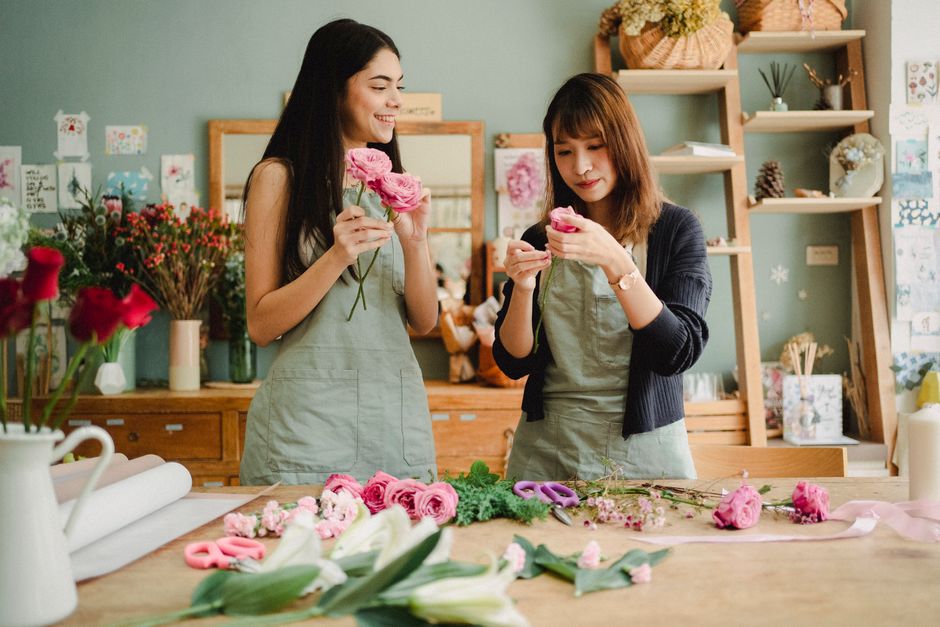
Frequently Asked Questions
Is DIY cheaper than using a professional florist?
Sometimes, yes. DIY can cost less if the arrangement is simple, the number of flowers is small, and you already have the tools. But once you add vases, transport, extra stems, and your time, the savings can shrink. For bigger events, the gap is often smaller than people expect.
When is it better to hire a professional florist?
It's usually better to hire a florist for weddings, funerals, corporate events, or any occasion where the flowers need to look polished and arrive reliably. If you're already under time pressure, professional support is often the safer choice.
Can I mix DIY flowers with professionally arranged ones?
Yes, and it's often a smart compromise. Many people use professionals for bouquets, buttonholes, or main displays, then create simple table arrangements themselves. That approach keeps the important details covered while protecting the budget.
What flowers are easiest for beginners to arrange?
Flowers that hold up well and have predictable shapes are usually easiest. Alstroemeria, carnations, chrysanthemums, and germini are often good starting points. They are not the only options, of course, but they tend to be more forgiving than delicate or highly structured blooms.
How far in advance should I plan floral arrangements?
For DIY, earlier is better because you need time to source materials and practise. For professional services, booking ahead is sensible for weddings and busy periods. If you need flowers quickly, check whether same-day or next-day delivery is available.
Do professional florists always use the exact flowers shown online?
Not always. Seasonal availability can affect what's used, and good florists may substitute similar flowers while keeping the overall style. That is normal practice, as long as the substitution stays true to the design and the florist communicates clearly.
How do I know if a DIY arrangement will last long enough?
Choose sturdy stems, keep them in clean water, trim them properly, and store them in a cool place before the event. If the arrangement needs to survive a long day or travel, professional help is often wiser because the design can be planned around longevity.
Are professional floral services worth it for small occasions?
They can be, especially if you want a specific look and don't want the hassle. For a small birthday or anniversary, a florist-made bouquet may save time and look more polished than a rushed DIY arrangement. It depends on the occasion and your confidence.
What should I ask a florist before ordering?
Ask about delivery timing, substitutions, care instructions, pricing, and what happens if an item is unavailable. If the arrangement is for a wedding or memorial, make sure names, dates, and styling details are checked carefully too.
Can I get good results without floristry experience?
Yes, for simple arrangements. But for anything complex, experience helps a great deal. If you're new to floristry, keep the design simple, start early, and don't overcommit. That last bit matters more than people think.
What is the biggest hidden cost of DIY flowers?
Usually time. The second biggest is waste. Mistimed deliveries, extra stems, and spoiled flowers can all add up. A professional service may cost more upfront, but it often saves both time and stress.
Where can I find dependable flower delivery options locally?
Look for a local florist with clear product categories, delivery information, and care guidance. For example, if you need flowers in the Rush Green area, options like flower shops in Rush Green RM7 and delivery-focused pages can help you compare what's available without guessing.